
Cross-pavement charging
No driveway? You can still charge at home.
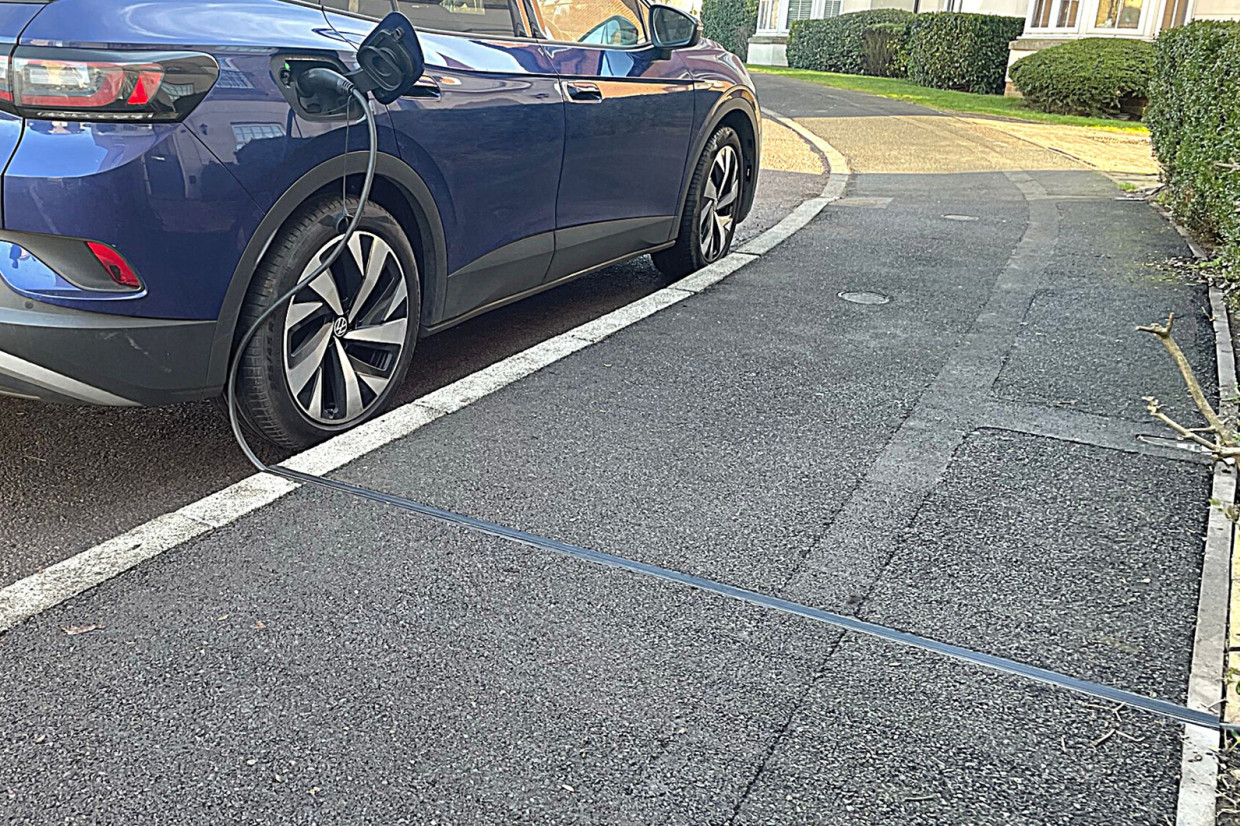
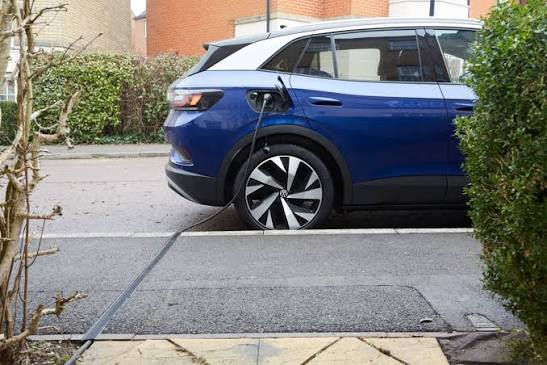
If you park on the street outside your house, a cross-pavement charging channel lets your cable run underneath the footpath instead of across it. No mats, no ramps, no trip hazard — and you charge on your home electricity tariff instead of paying public charging prices.
We install the charger, and partner with Kerbo Charge for the gully and the council permissions.
Why a gully beats a cable mat
Draping a cable over the pavement puts a hazard on a public footpath and, in most areas, isn't permitted. A channel set into the surface solves it properly.
No trip hazard
The cable sits below the pavement surface inside a self-closing channel, instead of running over it under a mat or ramp.
Takes any standard cable
The channel accepts cables up to 20mm diameter — that covers every standard Type 2 EV charging cable sold in the UK.
Home rates, not public rates
Charging at home on an EV tariff instead of relying on public rapids typically saves drivers around £1,100 a year.
Council approved route
Installations only go ahead where the local authority has a scheme in place. That approval is managed for you, not left with you.
Built to last
Rigid PVC construction tested to BS EN1433, rated for a vehicle driving over it, with a 25+ year design life and a 10 year product guarantee.
One visit, one team
We coordinate the charger and the channel together so you're not chasing two separate trades and two separate dates.
How it works
- 01
Tell us your postcode
We check whether your local authority already permits cross-pavement channels, and how far the cable run is from your consumer unit to the kerb.
- 02
We handle the permissions
Kerbo Charge manage the council approval for the pavement crossing. We line the channel up alongside your charger install so it's one joined-up job.
- 03
Install day
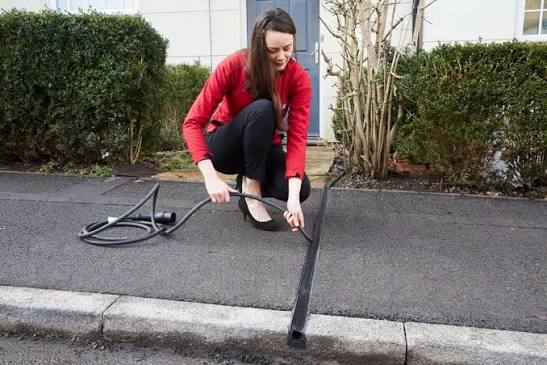
Your charger is fitted and tested, and the channel is cut into the pavement. The channel work itself is usually done inside an hour.
- 04
Charge at home rates
Lift the lid, feed the cable in and it zips closed behind. Pull it out when you're done and it shuts itself. No mats, no ramps, no cable across the path.
Is my house suitable?
A rough guide. We'll confirm properly once we've seen your postcode and a couple of photos.
- Terraced or mid-terrace house where you park on the road directly outside
- A pavement of roughly 1–3m between your property and the parking space
- A short front garden or path in front of the house — the run can cross both
- Pavement finished in asphalt, paving slabs or brick
- Grass verges — possible in some areas, but needs excavation and a concrete base, so it costs more
- Anywhere the cable would need to cross a road — these are not installed across carriageways
- Flats or shared parking with no reliable space next to your property
Frequently Asked Questions
Got questions? We've got straight answers.
Find out if your street can have one
Two minutes, no pressure. Give us your postcode and how you park, and we'll come back with a charger price and an honest answer on the cross-pavement channel for your address.